


Handbook
Handbook for teachers and educators, so that they can transmit their knowledge to students.

Workshops
Twelve training workshops (Ready-Steady-Go) will be held for students to become digital agents.

Infographics
20 infographics (DigiRecipe) for children to teach their family members.

Open platform
An open platform that will include all the materials developed in the DigiGap project.
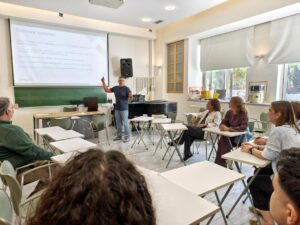
Moraitis School Hosts DigiGap National Multiplier Event in Athens, Greece
On 30 September 2026, Moraitis School in Psychiko, Athens, hosted the DigiGap national multiplier event in Greece. Fifteen education professionals from schools in Athens and the Greek provinces came together to explore the project’s methodology and educational resources, and to discuss how the DigiGap approach can be applied across different school levels. Participants included primary school teachers, two middle school teachers and an IT specialist — a combination that brought together diverse educational perspectives
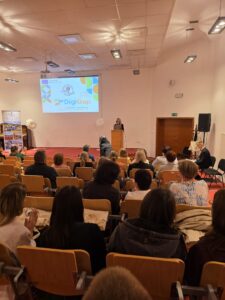
Primary School in Podłopień Hosts DigiGap National Multiplier Event in Tymbark, Poland
On 11 September 2026, the Public Library in Tymbark, Poland, hosted the DigiGap national multiplier event organised by Primary School in Podłopień. Nineteen participants from the local community gathered to explore the project’s outcomes and discuss how its resources can bridge the digital divide between students and their families. The event opened at 16:00 with a welcome session, the signing of the attendance list, the distribution of promotional materials and a brief networking activity.
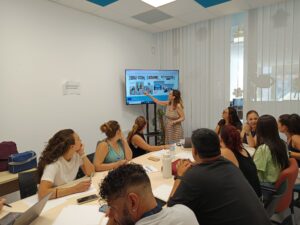
Carlos V School Hosts DigiGap National Multiplier Event in Águilas
On 1 July 2026, Carlos V School in Águilas, Spain, successfully hosted a DigiGap national multiplier event, bringing together 15 education professionals from a range of backgrounds, including secondary and primary school teachers, career guidance counsellors, and psychologists. The event provided a rich opportunity for participants to connect, exchange experiences, and explore the outcomes of the DigiGap project. The session opened with a warm welcome and an introduction of all participants, followed by an
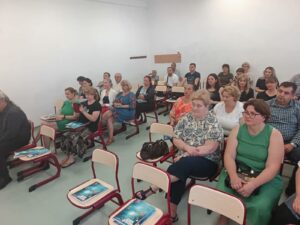
Liceul Tehnologic “Nicolae Stoica de Hațeg” Hosts DigiGap National Multiplier Event in Mehadia
On 25 June 2026, the DigiGap project reached another important milestone with the successful hosting of a national multiplier event at Liceul Tehnologic “Nicolae Stoica de Hațeg” in Mehadia, Romania. The event brought together 33 participants from a wide range of backgrounds, making it a vibrant and diverse gathering in the heart of the local community. The event welcomed headmasters, teachers, and educators, 10 of whom came from other schools across the county, and
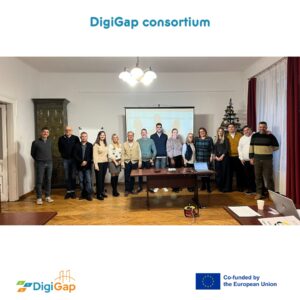
DigiGap Project Meeting in Krakow
Partners of the DigiGap project gathered in Krakow, Poland, for the project’s Third Transnational Meeting, hosted by SEDA. The two-day meeting brought together all partners to review progress, exchange experiences, and plan the next steps of this important initiative aimed at reducing the digital gap. The discussions focused on key project developments, particularly under Work Package 3 on Digital Change Agents. Partners reviewed the implementation of the “Ready, Steady, Go” workshops, developed through the
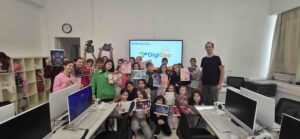
Students Become Digital Change Agents at Moraitis School Workshop
Moraitis School recently hosted a successful DigiGap Ready, Steady, Go! workshop, engaging 37 enthusiastic students from upper primary and lower secondary grades in hands-on activities aimed at bridging the digital generation gap and strengthening digital competence. Part of the Erasmus+ DigiGap project, the workshop encouraged students to become Digital Change Agents who can support their families and wider communities in navigating digital technologies. Throughout the session, participants explored topics such as digital generational divides,